
Assessment 007 | The Exit
A diplomatic window has opened. An Iranian official is at the table. The bombs have paused. Before you believe this is ending, here is what an actual exit requires and what is missing from every frame

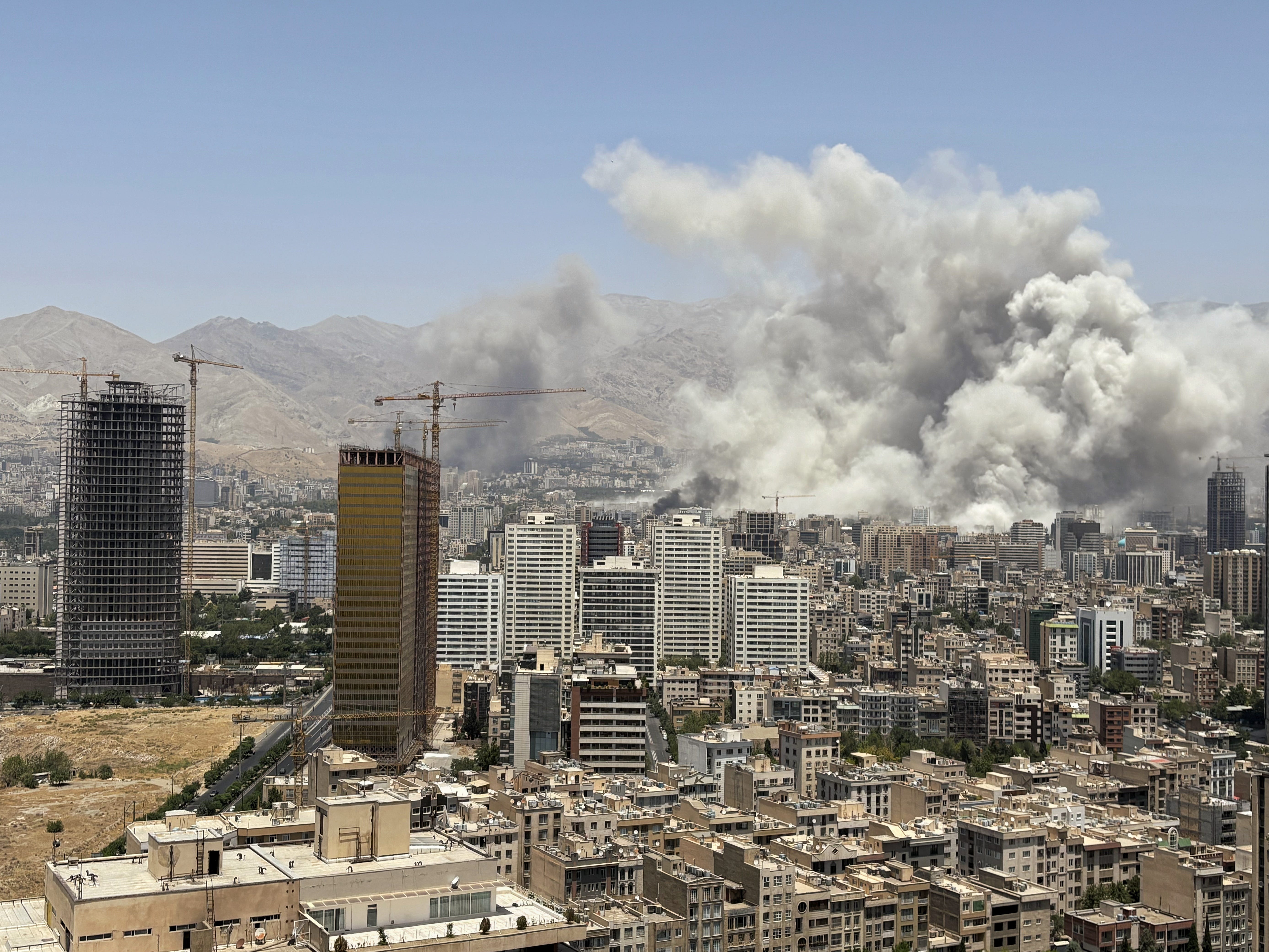
Two days before the bombs fell, Iran offered to give up what the United States said it wanted most. The door that opened that morning is open again.
On February 26, 2026, Iranian Foreign Minister Abbas Araghchi offered to voluntarily dilute Iran’s enriched uranium stockpile. It was the maximum concession Iran had ever made on its nuclear program in 47 years of the Islamic Republic. Oman’s Foreign Minister announced a breakthrough the following day. Peace was within reach. Talks were scheduled to resume March 2.
The bombs fell February 28.
Israeli military intelligence had been tracking Ayatollah Ali Khamenei’s movements. The CIA confirmed the targeting intelligence independently. Netanyahu called Trump on February 23 to relay that Khamenei and his entire inner circle would meet at a single location in Tehran on Saturday morning. They could all be killed in a single airstrike. The Geneva talks concluded the same week. Witkoff and Kushner called Trump and told him Iran was not willing to make the deal he would be satisfied with. On Friday at 3:38pm Eastern Time, Trump sent the message: Operation Epic Fury is approved. No aborts. Good luck.
One US official described the administration’s posture in the weeks before the strike. “One side of the house was negotiating and the other side of the house was doing joint military planning.”
Both sides of the house knew what the other was doing.
Now it is Day 25. Trump has announced a five-day pause on power plant strikes. His envoys are Witkoff and Kushner, the same team that was in Geneva when the CIA confirmed the February 28 meeting location. Trump says major points of agreement have been reached and Iran called him. He is expressing optimism about a deal. The intermediaries are Turkey, Egypt, and Pakistan. The Iranian interlocutor is assessed as Parliament Speaker Mohammad Bagher Ghalibaf, a former IRGC general and close associate of the new supreme leader.
The new supreme leader is Mojtaba Khamenei. Son of the man killed on February 28. He was in the compound when the strike hit. He has not been seen publicly in 25 days.
This assessment is about the exit. What it requires, who has to authorize it, what is missing from every framework currently being discussed, and what the architecture now visible in open source tells you about whether this door leads out or leads to the same place the last one did.
What the Pre-War Negotiations Actually Were
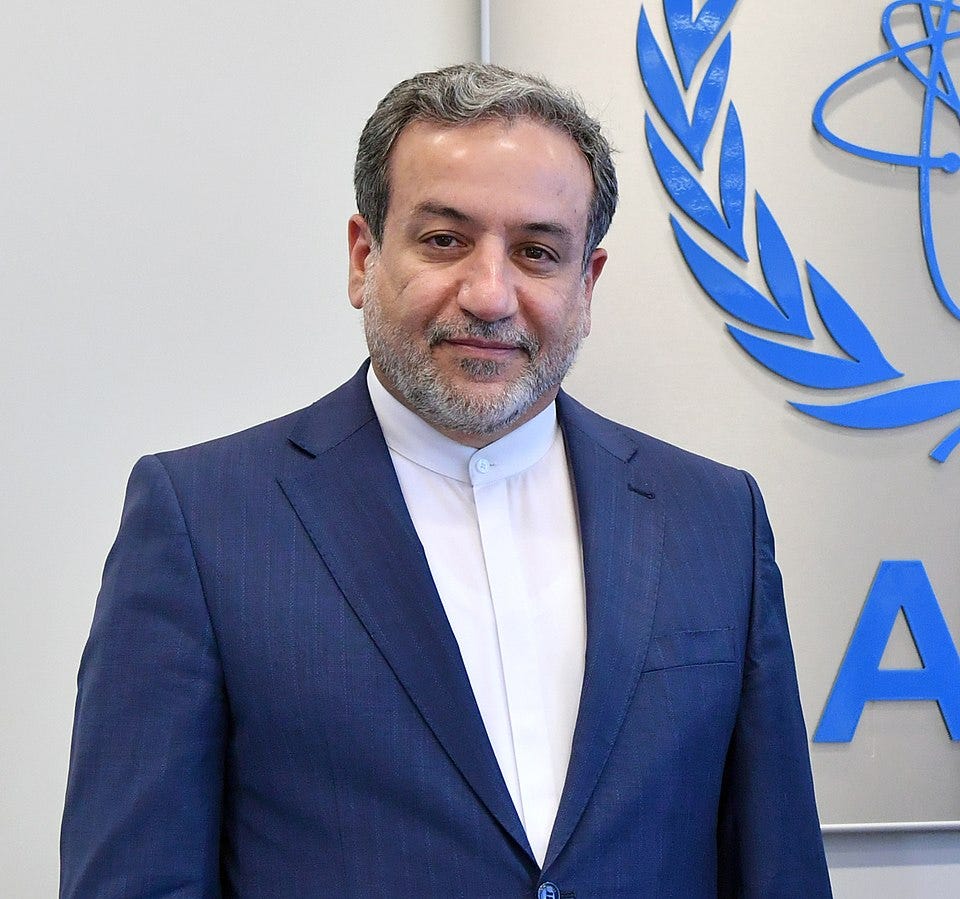
The evidence does not support the conclusion that the negotiations were a fabrication. It supports something more precise and more unsettling.
The negotiations were real. Araghchi was not performing confidence for a domestic audience when he described a historic agreement within reach on February 25. His February 26 HEU offer is the action of a negotiator who believed he was closing a deal. Iran’s maximum concession does not get made by a diplomat who suspects the other side is planning a strike. If Araghchi, Iran’s most experienced nuclear diplomat, the man who had sat across from every major Western power for years, did not detect the parallel military track, the deception was sophisticated enough to fool the person most positioned to identify it.
The planning was also real. Netanyahu met Trump on February 11 and they discussed prospects of war and possible dates for an attack alongside the possibility of a deal. War dates and deal scenarios were on the table in the same three-hour meeting. Israeli military intelligence had been tracking Khamenei’s movements before a single word of the February negotiations was spoken. The original strike timeline was late March or early April. Netanyahu pushed to accelerate.
What the February negotiations produced was not a deal. They produced two things simultaneously. First, genuine Iranian movement toward concession. The HEU offer, the Oman breakthrough, Araghchi’s historic agreement language. All of it real. All of it allowed to develop because it was producing something more valuable than a signed document. Second, reduced Iranian vigilance at exactly the moment it mattered most.
A leadership that believes it is about to sign a historic agreement does not go to ground. It meets. It coordinates. It puts everyone in the same room to prepare for implementation. The Oman FM’s announcement on February 27 was the signal that lowered Iranian guard at the worst possible moment. When a trusted neutral intermediary confirms a breakthrough, the natural response is not to disperse. It is to convene.
The intelligence was watching. The meeting was confirmed. The strike was ordered.
This is not a lie in the simple sense. It is a more dangerous thing. It is a genuine diplomatic process running in full awareness that a military option existed, was being planned in parallel, and would be executed if the intelligence window opened. The intelligence window opened on February 23. Five days later Khamenei was dead and the war had begun.
Netanyahu’s stated objective, confirmed across three independent sourced accounts, was regime change. Iranians might take to the streets, he told Trump. They might overthrow the theocratic system that had governed since 1979.
They did not. Twenty-five days of bombing, over five thousand targets struck, thousands of buildings destroyed, and the nationalist consolidation has not broken. The IRGC’s institutional grip on the population held. The premise that decapitation produces uprising has been falsified by every day of this conflict.
The war Netanyahu argued for produced exactly what strategic analysts predicted and exactly what the historical record of decapitation campaigns suggests. A wounded, degraded, furious adversary with no supreme leader willing to authorize an exit and no population willing to deliver the regime change the operation was designed to trigger.
Who Has to Authorize the Exit and Why He Cannot Yet
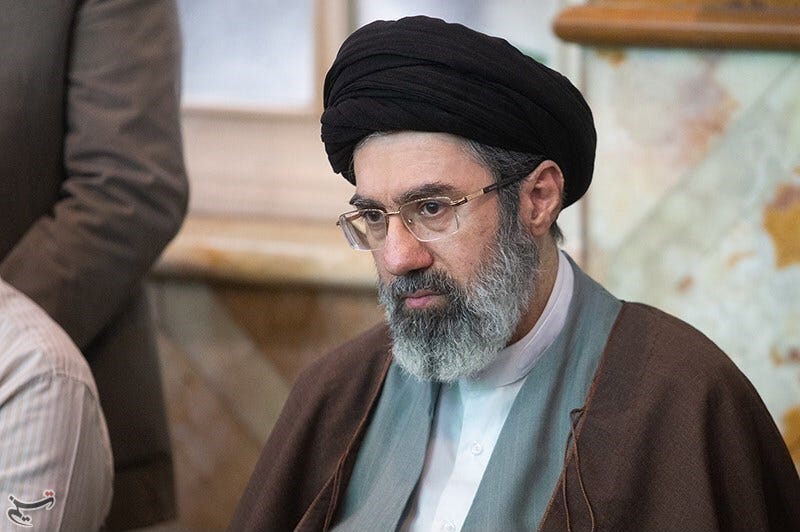
The exit requires one thing above all others. It requires Mojtaba Khamenei to authorize it.
Not Ghalibaf. Not Araghchi. Not the IRGC command council. The Islamic Republic’s constitutional architecture and the IRGC’s institutional loyalty both flow through the supreme leader. Any agreement that is not authorized by the supreme leader will not be honored by the IRGC. The ceasefire trap this publication has tracked since Assessment 003 is that any agreement signed by someone who cannot enforce it produces a pause, not a peace. Iran banks the pause, preserves its leverage position, and the war resumes on terms more favorable to the party that used the pause to rearm and reposition.
Mojtaba has not been seen in 25 days. Trump said publicly he does not know if he is alive. The IRGC has continued operating with coherent command. Iranian state media has released statements attributed to him. These are not the signatures of a dead leader. They are the signatures of a leader managing his public reentry with deliberate care.
Here is what that reentry requires and why it has not happened yet.
Mojtaba was in the compound when the missiles hit. He had stepped into the yard seconds before impact. He survived. His father did not. His wife did not. His child did not. He was inside the compound when the people who are now asking him to negotiate killed everyone around him and left him alive. That is not grief at a distance. That is survivor guilt compounded by the specific horror of having been present, unable to stop it, and left to lead a country that is asking him to make sense of it.
A minor leg injury does not explain 25 days of absence. That absence is a choice.
A man carrying that weight does not calculate the acceptable terms of an exit the way an outside analyst does. Every day of this war is not political for him. It is personal in a way that has no parallel in modern leadership psychology. The threshold for acceptable terms is not visible from outside. It is measured in something no policy framework can quantify. Whether the people who killed his family while he watched have paid a cost proportionate to what they took.
A supreme leader who appears publicly wounded, diminished, or visibly grief-stricken does not project the martyrdom-to-victory narrative the regime requires. The IRGC installed him to provide legitimacy and command authority. He provides neither from a position of visible fragility. He appears when he can stand, speak, and command the room. Not before.
The political calculus runs deeper than physical recovery. Mojtaba cannot authorize an exit until he can define acceptable terms. And acceptable terms for a man in his position are not terms that look like capitulation under bombardment. They are terms that make the destruction of his country and the death of his family mean something. The exhaustion doctrine Araghchi articulated on Day 16, that this war must end so our enemies never again think about repeating such attacks, is not just Iranian strategic doctrine. For Mojtaba personally it is the only outcome that converts loss into legacy.
Twenty-five days of missile barrages, a global energy crisis, $3.98 gasoline across America, and 3,000 vessels stranded in the Gulf is a cost. Whether it is the cost Mojtaba requires before he can authorize an exit, that calculation belongs to him alone.
No envoy in Islamabad can accelerate it.
The authorization problem is structural before it is personal. Even if Mojtaba were psychologically ready to authorize an exit today, the mechanism by which he communicates that authorization to the IRGC command, to Ghalibaf, and through the mediation architecture to the US without exposing his location to the same intelligence apparatus that found his father requires a level of operational security that Iran’s degraded signals infrastructure may no longer support. The personal and the structural problem converge on the same point. The exit cannot be authorized safely until Mojtaba can appear publicly. He cannot appear publicly until the terms are acceptable. The terms are not acceptable yet. The clock is running regardless.
What the US Actually Needs and What Getting It Requires
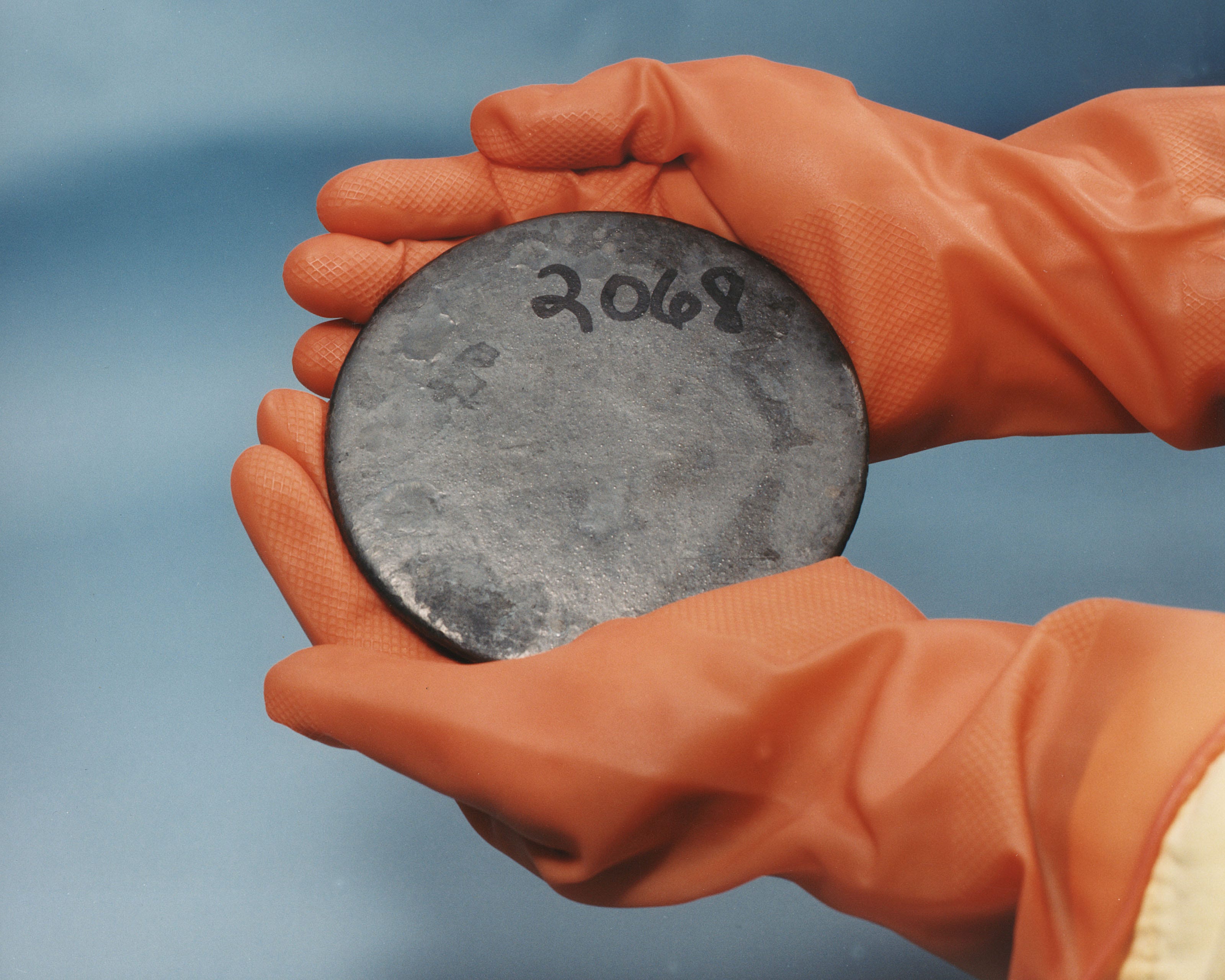
The US has stated its minimum requirements publicly across multiple senior official statements. Verified disposition of Iran’s enriched uranium stockpile. Full reopening of the Strait of Hormuz. End to attacks on Gulf states and US assets. Each of those requirements has a physical enforcement problem that the diplomatic framework being constructed in Islamabad has not yet addressed.
The HEU requirement is the most acute. Iran holds 440.9 kilograms of 60 percent enriched uranium, enough material for multiple nuclear devices if further enriched. The stockpile is assessed to be deep underground at Isfahan in tunnels that US airstrikes cannot penetrate. Secretary Rubio told Congress the solution plainly. People are going to have to go and get it.
Trump confirmed it from the other direction. If a deal is reached the US will move to take Iran’s enriched uranium.
There is no version of verified HEU disposition that does not require human beings on Iranian soil at the Isfahan facility. The options are a negotiated IAEA-escorted transfer with US military protection, a special operations seizure under a deal framework, or a conventional ground force securing the site. All three require US personnel in Iran. All three require Iranian authorization of that presence. All three require a supreme leader willing to sign off on foreign military personnel operating inside his country in the immediate aftermath of a war that killed his family.
The 82nd Airborne Immediate Response Force, 3,000 soldiers deployable anywhere in the world within 18 hours, is under active consideration for deployment alongside the 4,700 Marines already in theater. The stated mission is Kharg Island. The HEU retrieval requirement points toward Isfahan. Both missions require ground presence in Iran. Both are being planned simultaneously with the diplomatic track.
The administration is not preparing for a ground operation as an alternative to diplomacy. It is preparing for a ground operation as the mechanism by which the diplomatic outcome gets verified and enforced.
Those are not the same thing. A deal that requires US boots on Iranian soil to implement is not the end of the conflict. It is the conflict entering a new phase.
The Hormuz reopening requirement carries its own enforcement problem. Iran can agree to reopen the strait under a deal framework. The IRGC Navy retains the physical capability to close it again the moment the deal framework breaks down or the terms become politically untenable domestically. Any agreement that does not include a mechanism for sustained US naval presence in the strait as enforcement guarantee is an agreement that relies on Iranian compliance rather than structural deterrence. Iranian compliance without structural deterrence has a documented track record in this conflict of lasting exactly as long as Iranian interests require it to last.
The Architecture of Pressure

Every outlet covering this conflict has described Israel’s continued strikes as coalition incoherence. Two allies who cannot coordinate. A junior partner running ahead of the senior partner’s diplomatic track. This publication carried a version of that assessment in earlier dispatches, made on the basis of evidence available at the time. When the evidence changed, the assessment changed.
NPR confirmed the US and Israel are coordinated on all targets. Netanyahu confirmed he held off on energy infrastructure strikes at Trump’s explicit request. Vance called Netanyahu to discuss deal components on Day 24. The RC-135 reconnaissance architecture confirmed in open source flight track data shows sustained joint intelligence operations routing through Israeli air bases without interruption during the diplomatic pause. The collection did not stop when the diplomacy started. It accelerated.
The coordination is confirmed. The incoherence reading was wrong, updated when the evidence required it to be. That should be stated plainly.
The question that requires more precision is who is playing which role and why the simple Israel bad cop US good cop framing is incomplete.
Trump issued the 48-hour power plant ultimatum. Trump threatened to destroy Iran’s largest electric generation facility. Trump’s deadline was the specific threat that moved global energy markets to the edge and produced the conditions for Iran to test the diplomatic channel. Israel has not threatened Iranian power plants. Israel has been striking military targets, weapons production, command architecture, and defense industrial base. Devastating and sustained but within the established military campaign framework.
The power plant threat came from Trump. Not Netanyahu.
What the confirmed record actually shows is two separate pressure tracks running simultaneously. Trump created his own coercive track through the power plant ultimatum and is offering relief from that specific threat through the five-day pause. Israel is running a separate coercive track through sustained military strikes and is not pausing anything. Engaging the diplomatic track gets one pressure suspended. The other continues regardless.
Two pressure tracks. Two separate relief mechanisms. One diplomatic window. That architecture requires more coordination than a simple bad cop good cop split. It requires both parties to know which track they own, what they are offering relief from, and what continues regardless of whether Iran engages. The NPR confirmation that the US and Israel are coordinated on all targets is the sentence that makes this architecture visible. Coordination on all targets means coordination on what stops and what does not stop. That is not incoherence. That is a division of labor.
Netanyahu is not running ahead of the diplomatic track. He is one half of a dual pressure architecture that only functions if both halves are running simultaneously. The US can only offer relief from Trump’s threat. It cannot offer relief from Israel’s campaign because Israel’s campaign is what makes the US offer worth accepting.
Iran is not absorbing this pressure in an intelligence vacuum. US officials have confirmed state-level Russian intelligence sharing with Iran on military targeting. Open source reporting supports it. Russia denies it. The Maskirovka filter applied to that denial is straightforward. Russian-aligned hackers supporting Iranian cyber operations are confirmed across CrowdStrike, Unit 42, and multiple independent cybersecurity firms. Russian state media has run coordinated pro-Iranian framing throughout the conflict. The behavioral signature is consistent with active Russian support at the state level regardless of what Moscow says publicly. A patron providing targeting intelligence to a degraded adversary does not change the outcome of the air campaign. It extends the duration of resistance.
Every day Iran sustains coherent operations under the pressure architecture described in this section is partly a function of what Russia is providing through channels the US cannot easily interdict without opening a second strategic confrontation it is not prepared to manage simultaneously. The dual pressure architecture the US and Israel are running is effective. It is running against an adversary that is not entirely alone.
Today Bloomberg confirmed Iran cut natural gas exports to Turkey. The cause is assessed as South Pars damage from Israeli strikes last week. Operational or political, the effect is the same.
Turkey’s mediation was previously costless. A country hosting diplomatic channels between two warring parties absorbs no direct economic penalty for doing so under normal circumstances. That condition no longer holds. Iran has now imposed a direct economic cost on its primary intermediary, whether deliberately or through infrastructure damage it cannot control. That changes the incentive structure of the mediation architecture in a specific way. Turkey is no longer a neutral party absorbing nothing. Turkey is now a party absorbing Iranian gas cuts while passing messages that may be enabling a targeting operation against Iranian leadership. At some point that cost calculation changes Ankara’s posture from active mediator to concerned observer.
The dual pressure architecture assumed the mediating countries would remain cost-free participants. South Pars has falsified that assumption on day one of the five-day window.
The Architecture Running Now
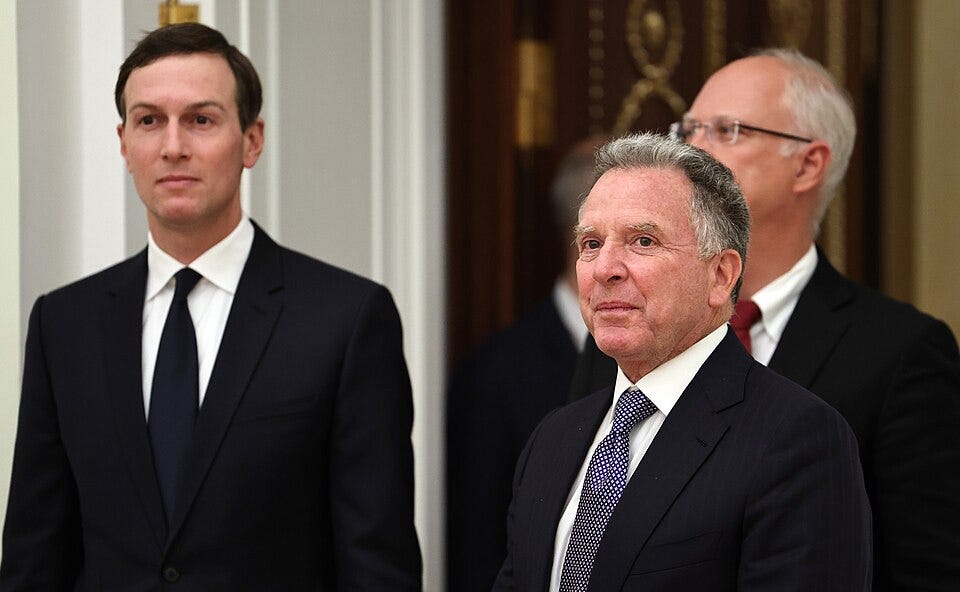
On Day 25 the following is confirmed in open source.
Witkoff and Kushner, the Geneva team, are the US envoys. Turkey, Egypt, and Pakistan are passing messages simultaneously. An in-person meeting in Islamabad is being organized for this week. Ghalibaf is assessed as the Iranian interlocutor per an Israeli official who named him to Axios reporter Barak Ravid. Trump said publicly he was dealing with the most respected Iranian official who was not the supreme leader. He said he did not want to name him because he did not want to get him killed.
Trump did not name Ghalibaf. The Israeli official did.
That distinction is not incidental. Trump maintaining public deniability on the name while an Israeli official places it in the public record through a named journalist serves a specific function. The name is now in the open source record. Ghalibaf’s involvement is publicly known. Trump can claim he protected the interlocutor. The Maskirovka filter asks who benefits from that specific sequence. Both the protection claim and the exposure outcome were produced simultaneously by two different actors in the same alliance. Whether that was coordinated or coincidental is the unanswerable question. It is not the kind of question that should stop being asked.
Apply the same analytical frame to the full architecture that the documented record applies to the pre-war negotiations.
The same envoys. The same diplomatic language. The same optimism about points of agreement. The same intermediary structure, neutral countries carrying messages between parties not yet publicly acknowledging contact. The same urgency window. The same military planning running alongside it. The 82nd Airborne on standby. 4,700 Marines in theater. Kharg Island seizure communicated to allies as intention not contingency.
One side of the house is negotiating. The other side of the house is doing joint military planning. Both sides of the house know what the other is doing.
The Maskirovka filter asks three questions. Who benefits from this information being public? What is notably absent? Why now?
Trump benefits from the announcement. Markets rose by two trillion dollars in one hour. Iran benefits from the pause. Its leverage position is frozen exactly where it sits, HEU intact, Hormuz under intelligent control, Kharg oil infrastructure untouched. Netanyahu benefits from continuing to strike. Every Israeli bomb that falls while US diplomacy runs makes the offer of restraint more valuable. Iran’s state media called the announcement market manipulation to buy time for military plans. All three characterizations can be simultaneously true.
The absence in the current framework is Mojtaba. His authorization is the one thing the framework requires and the one thing no outlet is discussing. The RC-135 flight track data updated March 23 shows sustained reconnaissance operations routing through Israeli air bases without interruption during the diplomatic pause. The collection did not stop when the diplomacy started. It accelerated. The same intelligence architecture that found his father is still running. Every runner, every intermediary, every travel pattern is simultaneously diplomacy and collection. Ghalibaf traveling to Islamabad may produce a framework. It may produce a location. It may produce both and the Iranians may not be able to separate those outcomes.
They know this. They lived through round one. The question is whether 25 days of bombardment, survivor guilt, degraded intelligence infrastructure, and the specific coercive pressure of a Friday night deadline have compromised the discipline required to engage the channel without exposing the man it is ultimately designed to reach.
What This Analysis Does Not Claim
This assessment does not claim the pre-war negotiations were definitively a collection operation. The confirmed record establishes that military planning ran in parallel with genuine diplomacy and that the intelligence window produced by Khamenei’s meeting may have been enabled by the leadership’s belief that a deal was imminent. Whether the negotiations were deliberately designed to produce that window or whether the window opened alongside a genuinely parallel diplomatic process is not resolvable from open source. The effect was identical regardless of intent.
This assessment does not claim the current diplomatic track is definitively a targeting operation against Mojtaba. That is an inference from pattern, not a confirmed fact. It is the hypothesis the analytical framework requires to be tracked, not a conclusion.
This assessment does not claim Mojtaba is being lured to Islamabad. He has not confirmed he is going. Ghalibaf denied any negotiations occurred. The meeting has not been confirmed by the Iranian side.
This assessment does not claim the coalition incoherence reading was wrong at the time it was made. It was the correct assessment given the evidence available at that time. When NPR’s coordination confirmation entered the record the assessment updated. That is the process working as designed.
What this assessment claims is this. The exit is real. The trap is real. The confirmed record establishes that both can occupy the same space simultaneously. Iran knows this. The US and Israel know Iran knows this. The coercive architecture is calibrated precisely to make engaging the trap less immediately catastrophic than refusing it. That is not a conspiracy. It is documented strategy confirmed across multiple independent sourced accounts applied twice in 25 days against the same adversary.
The Five Facets

Five separate analytical threads run through this assessment. They were developed independently, each grounded in its own confirmed evidence. Before stating where they arrive, each one deserves to be walked through completely, because the conclusion only carries the weight of the argument that built it.
The first facet is the pre-war negotiations. The diplomatic track Iran believed was producing a historic agreement produced instead the targeting intelligence and the leadership complacency that made the decapitation possible. Araghchi’s HEU offer on February 26 was the signal that the leadership was concentrated, communicating, and operating under the assumption that an agreement was imminent. That assumption put them in the same room. The room was the target. The negotiations did not fail. They succeeded at something other than their stated purpose. That is a more precise and more dangerous conclusion than calling them a lie.
The second facet is the dual pressure architecture. Israel’s continued strikes are not coalition incoherence. They are one half of a coordinated dual pressure track confirmed by NPR, Vance’s call with Netanyahu, and the RC-135 operations that did not pause when the diplomacy started. Trump owns the power plant threat and its relief. Israel owns the military campaign and its continuation. The US offer provides relief from one track while the other runs without pause. That architecture only functions if both halves know their role and execute it simultaneously. The coordination is confirmed. The division of labor is visible. The conclusion is that Netanyahu is not a junior partner running ahead of the diplomatic track. He is the mechanism that gives the diplomatic track its coercive value.
The third facet is Mojtaba’s psychology. He had stepped into the yard seconds before impact. Everyone inside died. His father. His wife Zahra Haddad-Adel. Their son. Several senior officials. He sustained a minor leg injury and walked out of the rubble of his family. He survived while his family died. He carries survivor guilt compounded by the political requirement to project strength he may not yet possess and the personal requirement to extract a cost he cannot yet quantify. A man in that position does not authorize an exit that looks like capitulation to the people who killed his family while he watched. The threshold for acceptable terms is personal before it is political. It is not visible from outside. It may not be reachable within any timeline the US domestic political situation can sustain. The exit waits on a calculation that belongs to one man and cannot be accelerated by any envoy in any city.
The fourth facet is the current diplomatic track as collection architecture. If the pre-war negotiations enabled the first decapitation by producing complacency, the current track may enable the second by producing pattern of life. The Israeli official naming Ghalibaf through Axios while Trump maintained deniability is the specific signature of an architecture managing both diplomatic and intelligence functions simultaneously. Every runner is a data point. Every travel pattern is collection. Every intermediary is a potential penetration point. The Iranians know this. They lived through the first playbook. The question is whether 25 days of degradation, grief, and coercive pressure have compromised the discipline required to engage the channel without exposing the man it may ultimately be designed to reach.
The fifth facet is the elimination problem. Killing Mojtaba does not end the war. It removes the only figure who could authorize an exit on terms the IRGC would honor. The Assembly of Experts was struck on Day 4. The succession mechanism is degraded. The IRGC continues under standing orders with no political head authorized to commit it to terms. A second decapitation produces a war with no Iranian authority capable of agreeing to stop it. The hydra grows a new head but the new head inherits a war it did not start, a population told for 25 days the enemy must pay, and no mandate to be the person who says it is enough. The elimination of Mojtaba solves the targeting problem and creates an unsolvable political problem in the same action.
Five threads. Five independent bodies of confirmed and assessed evidence. Each one built from a different starting point. Each one arriving at the same conclusion.
The exit and the trap are the same door.
Watch List
What to watch before Friday evening when the clock expires.
The Islamabad meeting is confirmed with a named date. Any Pakistan Foreign Ministry readout with a specific date signals the framework has advanced from organizing to committed. Absence of confirmation by Wednesday signals the channel is stalling.
Ghalibaf’s language shifts. He denied negotiations and called US claims fake news. Watch for any movement from outright denial to qualified engagement language. Any statement that moves from fake news to Iran’s principled positions are clear signals he has moved from cover maintenance to active participation.
Turkey’s mediation posture changes following the gas cut. Any reduction in Fidan’s call tempo or shift from active mediation language to concerned observer language signals Iran has compromised its own primary channel, deliberately or through damage it cannot control.
Israel strikes Iranian power infrastructure before Friday. The five-day pause covers US strikes on power plants and energy infrastructure only. It does not cover Israeli strikes on any target. Any Israeli strike on Iranian power generation before Friday collapses the diplomatic window and removes the primary coercive incentive for Iranian engagement. Iranian claims of overnight power plant damage are currently unconfirmed. Independent confirmation pending. If confirmed, Iran's stated red line trigger has been crossed before the window expires.
Mojtaba appears publicly in any form. A statement, a video, an official function. Any confirmed appearance changes the authorization calculus immediately. Continued absence after 25 days is itself the analytical finding. A supreme leader who cannot appear is a supreme leader who cannot authorize.
HEU disposition language surfaces in any framework reporting. Any Islamabad framework that does not include specific verified HEU transfer terms is not a deal. It is a pause with paperwork. Watch for the specific language around HEU in any reported framework outline. Its presence or absence tells you whether this is a genuine off-ramp or a ceasefire trap with better branding.
The Door

Mojtaba Khamenei is somewhere in Iran. He is watching his country absorb its 25th consecutive day of bombardment. He is watching the same envoys who were in Geneva the week his family died announce major points of agreement and express optimism about a deal. He is watching Turkey, his gas customer and his primary diplomatic intermediary, absorb the economic cost of South Pars damage while passing messages on his behalf.
He knows what the last deal announcement produced.
The exit this assessment describes is real. A framework is possible. The terms exist on paper. The Oman pre-war agreement, HEU dilution, IAEA verification, no stockpiling, was close enough to completion that Oman’s FM announced a breakthrough the day before the bombs fell. The architecture for a deal existed before the war. It exists now in degraded form with higher costs on both sides and a different man sitting where Khamenei sat.
But the exit requires that man to walk through a door he has every reason to believe leads to the same place the last one did. It requires him to calculate that the cost of continuing exceeds the cost of terms he cannot yet define as acceptable. It requires him to appear publicly, in strength, and authorize an agreement that his family’s deaths must somehow justify. It requires him to trust an architecture built by the people who killed them.
None of those requirements are met today. Some of them may never be met on terms the US will accept.
The five-day window expires Friday evening. The 82nd Airborne is on standby. The Marines are in theater. The RC-135s are still flying. One side of the house is negotiating.
The other side of the house never stopped.
Analytical Methodology
This publication applies structured analytic techniques used in intelligence analysis and open-source investigations, including Analysis of Competing Hypotheses (ACH), systemic analysis frameworks, probability and confidence standards derived from UK Joint Intelligence Committee (JIC) methodology, deception-awareness concepts such as Maskirovka, Key Assumptions Checks (KAC), and geolocation techniques used in modern OSINT investigations.
Confidence levels are stated explicitly:
CONFIRMED — Three or more independent, non-aligned sources supported by physical evidence.
ASSESSED — A single credible source consistent with established patterns or corroborating indicators.
CLAIMED — A single, possibly aligned source with no independent corroboration.
All information used in this analysis is derived from open-source material. This publication is independent, with no government affiliation and no institutional funding.
This analysis is so rigorous. It’s invaluable.
Who are you? JVL just turned me onto you. Outstanding piece of reporting.